Review Bombing: Indie Film Impact & 2026 Cases
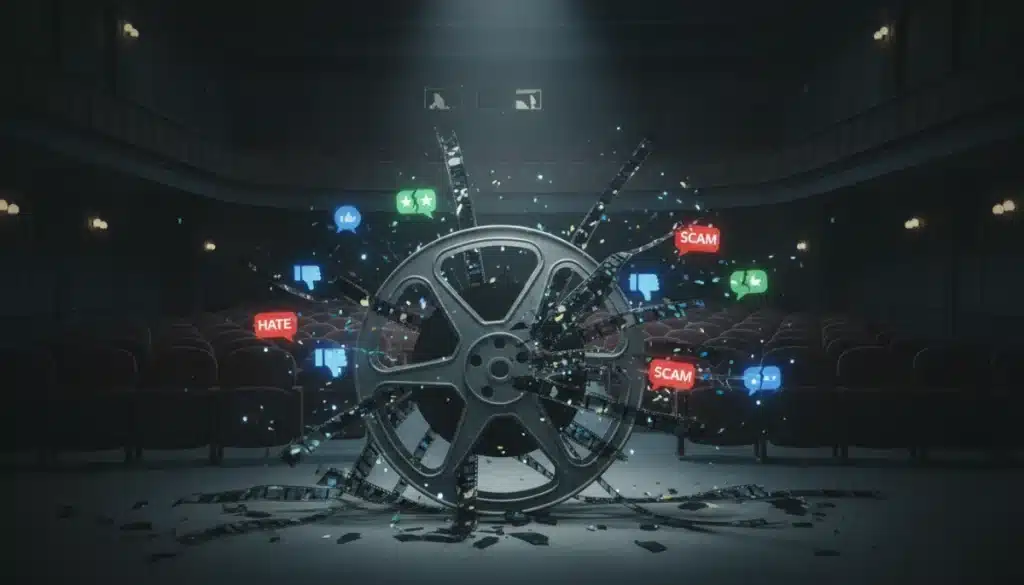
Review bombing, a coordinated effort to post negative online reviews, significantly impacts the indie film scene by distorting public perception and financial viability.
Indie film review bombing has emerged as a formidable challenge within the entertainment landscape, particularly impacting the delicate ecosystem of independent cinema. This phenomenon, characterized by a coordinated deluge of negative online reviews, can severely skew public perception and financial prospects for films that often rely heavily on critical and audience reception to find their footing. As we look towards 2026, understanding its mechanisms and consequences becomes paramount for filmmakers and audiences alike.
The anatomy of review bombing: definition and drivers
Review bombing is a digital age phenomenon where a large group of people deliberately posts negative reviews for a film, game, or product, often unrelated to its actual quality. This coordinated attack aims to artificially lower its aggregate score on platforms like IMDb, Rotten Tomatoes, or Metacritic. The motivations behind such campaigns are varied and complex, ranging from genuine dissatisfaction to politically or socially motivated backlash.
Understanding the drivers behind review bombing is crucial for addressing its impact. Sometimes, it stems from a perceived slight or controversy surrounding the film’s production, casting, or thematic content. Other times, it can be a reaction to perceived “wokeness” or progressive messaging, leading to ideologically driven attacks. The anonymity of the internet often emboldens these groups, allowing them to act without fear of direct repercussion.
Technological facilitation and community mobilization
The rise of social media platforms and online forums has significantly facilitated review bombing. These platforms allow individuals with shared grievances or agendas to quickly organize and execute coordinated attacks. The viral nature of online content means that a call to action can spread rapidly, mobilizing thousands in a short period.
- Social media organizing: Platforms like X (formerly Twitter), Reddit, and Facebook groups are frequently used to coordinate review bombing campaigns.
- Anonymity: The ability to post reviews under pseudonyms or without extensive verification makes it easier for individuals to participate without accountability.
- Echo chambers: Online communities can amplify negative sentiment, creating echo chambers where dissenting opinions are suppressed, and the collective desire to “bomb” a title intensifies.
The technological infrastructure of review sites themselves also plays a role. While many platforms have implemented measures to detect and mitigate review bombing, the sheer volume of attacks can sometimes overwhelm these systems. This makes it challenging to distinguish legitimate criticism from malicious, coordinated efforts.
Ultimately, review bombing represents a weaponization of audience feedback, transforming a valuable tool for consumer guidance into a means of digital protest or sabotage. For independent films, which often lack the marketing budgets of major studios, a review bomb can be a death knell, making it harder to attract distributors, secure screenings, and ultimately reach their intended audience.
Economic ramifications for indie cinema in 2026
The economic impact of review bombing on independent cinema in 2026 is a critical concern, as these films often operate on razor-thin margins and depend heavily on positive word-of-mouth and critical acclaim to succeed. Unlike studio blockbusters, indie films rarely have the luxury of extensive marketing campaigns to counteract negative press. A sudden drop in aggregate review scores can directly translate into significant financial losses.
Negative review scores, even if artificially inflated by a review bomb, deter potential viewers. Audiences increasingly rely on aggregate scores from platforms like Rotten Tomatoes and Metacritic to decide what to watch. A film with a low score, regardless of the reason, is less likely to attract ticket sales, VOD rentals, or streaming subscriptions. This directly impacts box office revenue and subsequent distribution deals.
Impact on distribution and investment
Distributors and investors closely monitor critical reception and audience sentiment when considering backing an independent film. A review-bombed film immediately becomes a high-risk proposition.
- Reduced acquisition offers: Distributors may offer lower advances or even withdraw interest if a film’s public perception is severely damaged.
- Limited theatrical runs: Cinemas are less likely to allocate screens to films with poor audience scores, further limiting their reach and revenue potential.
- Loss of future funding: Filmmakers whose projects are review-bombed may find it harder to secure funding for future projects, as investors become wary of potential backlash.
The ripple effect extends to ancillary markets as well. Streaming platforms might be less inclined to license a film with a tarnished reputation, and international sales could suffer. For indie filmmakers, who often invest their own money or rely on crowdfunding, these economic repercussions can be devastating, potentially ending careers and stifling creative expression.
Moreover, the perception of a film being “controversial” due to a review bomb, even if the controversy is unfounded, can make it difficult to secure promotional partners or even film festival slots. Festivals, while often champions of independent cinema, still consider public reception when curating their lineups. The economic vulnerability of indie films makes them particularly susceptible to the destructive power of review bombing.
Notable review bombing cases and their lessons
Examining past instances of review bombing offers crucial insights into its mechanics and consequences. While specific cases for 2026 are yet to unfold, historical examples provide a blueprint for understanding the challenges independent films might face. These cases highlight diverse motivations and the varying degrees of impact on a film’s trajectory.
Case Study 1: The social commentary backlash
One prominent example involves an indie drama from a few years ago that tackled a sensitive social issue. The film, lauded by critics for its nuanced portrayal, was met with an organized review bomb campaign shortly after its limited release. The coordinated attack stemmed from a vocal online group disagreeing with the film’s progressive messaging, perceiving it as “woke propaganda.”
- Initial impact: The film’s audience score on major review aggregators plummeted from a respectable 80% to below 30% within days.
- Media narrative: The review bombing itself became a news story, overshadowing discussions about the film’s artistic merit.
- Long-term effects: Despite critical praise, the low audience score likely deterred casual viewers, impacting its VOD performance and preventing a wider theatrical release. The filmmakers expressed frustration over their message being distorted by coordinated negativity.
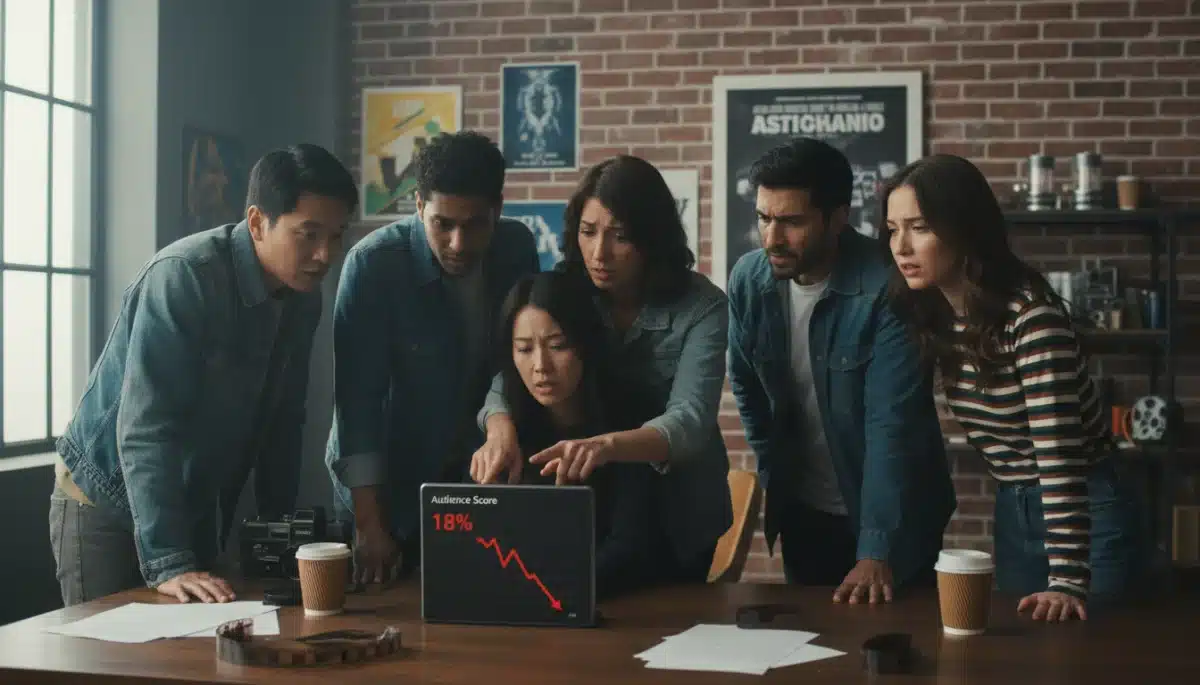
This case taught us that films engaging with contemporary social themes are particularly vulnerable to ideologically driven review bombs. The lesson for 2026 indie filmmakers is to anticipate potential backlash and consider proactive strategies to engage with online communities.
Case Study 2: The perceived historical inaccuracy
Another notable instance involved an independent historical drama that took creative liberties with certain factual events to enhance its narrative. While artistic license is common in historical fiction, a segment of history enthusiasts online perceived these deviations as disrespectful and launched a review bomb. Their campaign focused on detailed critiques of historical inaccuracies rather than the film’s cinematic qualities.
The film, which had received mixed but generally positive critical reviews, saw its audience score drop significantly. The review bombing was effective because it framed the film as “inaccurate” and “misleading,” tapping into a desire for historical fidelity among a passionate audience segment. This particular campaign was less about social politics and more about a perceived betrayal of historical truth.
The lesson here is the importance of managing audience expectations, especially when dealing with sensitive subject matter or historical narratives. While artistic freedom is paramount, understanding potential triggers for online backlash can help filmmakers prepare or even engage in preemptive dialogue.
Case Study 3: The actor-related controversy
A third type of review bombing often targets films due to controversies surrounding an actor or crew member, rather than the film itself. An indie comedy, featuring a relatively unknown actor who had been involved in a minor online controversy years prior, became the target. The review bomb was an attempt to “cancel” the actor, with the film serving as collateral damage.
The film’s aggregated audience score suffered, and many reviews explicitly mentioned the actor’s past controversy, demonstrating that the negative feedback was not about the film’s quality. This type of attack is particularly insidious for indie films, as they often rely on emerging talent who might have a less scrutinized past than established stars.
These cases underscore the multifaceted nature of review bombing and its potential to inflict significant damage on indie films. The lessons learned emphasize the need for robust mitigation strategies and a deeper understanding of online community dynamics for the indie film scene in 2026.
Strategies for mitigating review bombing in 2026
Mitigating the impact of review bombing requires a multi-pronged approach, encompassing proactive community engagement, platform-level safeguards, and effective crisis communication. For the indie film scene in 2026, these strategies will be crucial for protecting artistic integrity and financial viability.
One of the most effective proactive measures is to foster a strong, positive community around the film before and during its release. Engaging with potential audiences on social media, sharing behind-the-scenes content, and creating a sense of investment can build a loyal fanbase that is more likely to defend the film against unwarranted attacks. This positive sentiment can help to offset negative campaigns.
Platform and industry collaboration
Independent filmmakers and industry bodies need to collaborate closely with review platforms to develop and implement more robust detection and mitigation tools. While platforms like Rotten Tomatoes and IMDb have made strides, more needs to be done to identify and filter out coordinated, inauthentic reviews.
- Improved AI detection: Utilizing advanced AI to identify patterns indicative of review bombing, such as sudden surges in negative reviews from new accounts.
- Enhanced verification: Implementing stricter verification processes for reviewers, potentially linking reviews to verified ticket purchases or streaming subscriptions.
- Faster response times: Establishing clear channels for filmmakers to report suspected review bombing and ensuring prompt investigation and removal of illegitimate reviews.
Furthermore, industry organizations can advocate for policies that protect independent films from these malicious campaigns. This might include educational initiatives for audiences about the nature of review bombing and its detrimental effects on cinema.
Crisis communication and audience education
When a review bomb occurs, effective crisis communication is paramount. Filmmakers and distributors should have a plan in place to address the situation transparently and directly. This could involve issuing statements, engaging with reputable media outlets to explain the situation, and encouraging genuine audience members to share their honest feedback.
Educating the audience about review bombing is also vital. Many viewers may not be aware of the phenomenon or how it can distort a film’s true reception. By raising awareness, the industry can empower audiences to critically evaluate review scores and recognize when a film might be unfairly targeted. This collective effort can help to preserve the integrity of online film criticism and ensure that independent voices continue to thrive in 2026 and beyond.
The ethical dilemma: freedom of speech vs. malicious intent
The discussion around review bombing invariably leads to a complex ethical dilemma: how do we balance the principles of freedom of speech and legitimate criticism with the need to protect creators from malicious, coordinated attacks? This tension is particularly acute in the digital age, where the line between genuine dissent and targeted harassment can often blur.
Proponents of unrestricted online reviews argue that any attempt to moderate or remove content, even in the case of review bombing, infringes upon individuals’ right to express their opinions. They contend that all feedback, positive or negative, contributes to a complete picture of a film’s reception. However, this perspective often overlooks the coordinated and often disingenuous nature of review bombs, which are designed to manipulate rather than genuinely critique.
Distinguishing criticism from abuse
The core of the ethical challenge lies in distinguishing legitimate, albeit harsh, criticism from abusive, coordinated attacks intended to harm. Genuine criticism typically focuses on the film’s artistic merits, narrative, performances, or technical aspects. While it can be negative, it usually comes from individual perspectives and offers specific points of contention.
- Legitimate criticism: Offers specific points about the film’s content, often from individual perspectives.
- Review bombing: Often lacks specific cinematic critique, focuses on external controversies, and shows patterns of coordinated, rapid negative posting.
- Intent: Genuine critics aim to evaluate; review bombers often aim to punish or suppress.
Review bombing, by contrast, frequently targets aspects external to the film itself, such as the perceived politics of the creators, social themes addressed, or even controversies involving cast members. The language used is often inflammatory, and the timing of the negative reviews can indicate a coordinated effort rather than organic audience reaction.
For independent filmmakers in 2026, navigating this ethical landscape means advocating for systems that protect against malicious intent without stifling genuine critical discourse. It requires platforms to invest in sophisticated moderation tools that can discern between authentic feedback and orchestrated digital sabotage. Ultimately, the goal is to preserve the integrity of audience reviews as a valuable resource, ensuring they reflect genuine public sentiment rather than manipulated narratives.
The future of audience reviews and indie film
The future of audience reviews and their interaction with the indie film scene in 2026 is at a critical juncture. As digital platforms continue to evolve and online communities become more organized, the challenges posed by review bombing are likely to persist. However, there are also opportunities for innovation and adaptation that could lead to a more resilient and equitable ecosystem for independent cinema.
One potential future development is the emergence of more sophisticated review platforms that prioritize verified audience feedback. Imagine a system where reviews from individuals who have demonstrably watched the film (e.g., through ticket purchase verification or streaming service integration) carry more weight. This would make it significantly harder for coordinated attacks to artificially depress scores, as each negative review would need a legitimate viewing associated with it.
Innovations in audience engagement
Beyond technical solutions, the future also holds promise for more creative and direct engagement between indie filmmakers and their audiences. Crowdfunding platforms, for instance, could evolve to include built-in review mechanisms that foster constructive criticism within a supportive community. This could create a buffer against external, malicious attacks by cultivating a dedicated core audience.
- Direct filmmaker interaction: Q&A sessions, behind-the-scenes content, and direct communication can foster a sense of community and loyalty.
- Curated feedback channels: Platforms could offer tools for filmmakers to solicit specific feedback, allowing them to address concerns proactively.
- Reputation systems for reviewers: Implementing systems that reward constructive, thoughtful reviews and flag potentially malicious accounts could improve overall review quality.
The indie film scene has always thrived on its ability to innovate and adapt. In 2026, this will extend to how filmmakers navigate the digital landscape of audience reviews. By embracing new technologies, fostering stronger community bonds, and advocating for fairer review practices, independent cinema can continue to tell diverse stories and find its audience, even in the face of evolving digital challenges. The goal is to ensure that genuine voices, both of creators and viewers, are heard above the noise of coordinated negativity.
| Key Aspect | Brief Description |
|---|---|
| Definition | Coordinated negative online reviews to artificially lower a film’s score. |
| Economic Impact | Deters viewers, harms distribution deals, and limits future funding for indie films. |
| Mitigation Strategies | Community engagement, platform safeguards, and transparent crisis communication. |
| Ethical Dilemma | Balancing freedom of speech with protection against malicious, coordinated attacks. |
Frequently asked questions about review bombing
Review bombing refers to a coordinated effort by a large group of people to post numerous negative online reviews for a film. This action aims to artificially depress its aggregate score on review platforms, often regardless of the film’s actual quality or artistic merit.
Indie films are highly vulnerable because they often lack large marketing budgets and rely heavily on positive critical and audience reception for visibility and financial success. A sudden influx of negative reviews can quickly derail their chances of distribution, audience engagement, and future funding, impacting their delicate economic model.
Motivations vary widely, including dissatisfaction with a film’s themes, perceived social or political messaging, controversies surrounding cast or crew, or even perceived historical inaccuracies. These campaigns are often driven by collective grievances rather than genuine critiques of cinematic quality.
Platforms can combat review bombing by implementing advanced AI detection for suspicious patterns, requiring stricter reviewer verification (e.g., proof of viewing), and establishing faster response times for reported campaigns. Collaboration with filmmakers and industry bodies is also crucial for developing more robust safeguards and transparent reporting mechanisms.
Filmmakers can foster strong, positive communities around their projects through social media engagement, prepare crisis communication plans, and advocate for platform improvements. Building a loyal fanbase and educating audiences about the phenomenon can help mitigate the impact of coordinated negative attacks.
Conclusion
The phenomenon of review bombing presents a complex and evolving challenge to the independent film scene. As we move into 2026, its potential to distort audience perception and inflict significant economic damage on indie projects remains a pressing concern. However, through a combination of proactive community engagement, enhanced platform safeguards, and transparent communication, the industry can work towards mitigating its impact. Ultimately, ensuring the integrity of audience feedback is vital for fostering a fair and thriving environment where independent cinematic voices can continue to flourish, free from the shadow of malicious digital sabotage.