Sci-Fi Critical Consensus 2026: Only 2 of 10 Earn High Marks
The 2026 critical consensus on sci-fi films reveals a striking trend where merely two out of ten recent releases garnered high marks, signaling a significant shift in critical reception and audience expectations for the genre.
In the ever-evolving landscape of cinematic storytelling, the critical consensus on sci-fi in 2026 has unveiled a surprising and somewhat disheartening trend. Despite a robust release schedule, only two out of ten recent science fiction films managed to secure high marks from critics. This phenomenon prompts a crucial examination of what constitutes success in contemporary sci-fi and why so many productions are falling short.
Understanding the Evolving Sci-Fi Landscape
The science fiction genre has always been a mirror reflecting humanity’s hopes and fears, often pushing technological and philosophical boundaries. However, 2026 seems to mark a pivotal moment where the sheer volume of releases is not correlating with critical acclaim. This section delves into the factors contributing to this changing landscape, from audience fatigue to creative stagnation.
The rise of streaming platforms has democratized content creation, leading to an explosion of sci-fi narratives. While this offers diverse stories, it also means a saturation of the market. Critics and audiences alike are now more discerning, with a heightened expectation for originality and depth. Generic plots and recycled tropes, once tolerated, are now met with swift condemnation.
The Challenge of Originality
One of the most significant hurdles for modern sci-fi is the demand for originality. With decades of rich storytelling, finding truly novel concepts is increasingly difficult. Many recent films are perceived as rehashes or slight variations of established classics, failing to offer fresh perspectives.
- Recycled Themes: Stories about AI uprisings, dystopian futures, and space exploration often feel too familiar.
- Lack of Innovation: Visual effects, while impressive, often overshadow a lack of narrative innovation.
- Franchise Fatigue: An over-reliance on pre-existing intellectual property can stifle new ideas.
Ultimately, the evolving sci-fi landscape suggests a genre in flux. Audiences are hungry for bold, imaginative stories that challenge their perceptions and offer genuine escapism, but many recent offerings have struggled to deliver on this promise, leading to a noticeable dip in critical reception.
The Role of Narrative Depth and Character Development
Beyond innovative concepts, the critical consensus often hinges on the quality of storytelling and the resonance of its characters. In 2026, many sci-fi films are being criticized for prioritizing spectacle over substance, leaving audiences emotionally detached and intellectually unstimulated. This section explores how a lack of narrative depth and underdeveloped characters contribute to lower critical scores.
A compelling sci-fi narrative doesn’t just present a futuristic world; it explores the human condition within that world. When characters are mere conduits for plot points or special effects, the audience struggles to connect. Critics frequently highlight instances where complex themes are introduced but never fully explored, resulting in a superficial experience.
Shallow Character Arcs
The journey of a character is central to any story, and sci-fi is no exception. However, many recent productions feature protagonists who undergo little to no meaningful development, making their struggles and triumphs feel hollow. This often stems from a rushed script or an overemphasis on external conflicts.
- One-Dimensional Protagonists: Characters lacking internal conflict or clear motivations.
- Unexplored Relationships: Interpersonal dynamics that feel forced or underdeveloped.
- Predictable Endings: Character resolutions that offer no surprises or emotional weight.
The most successful sci-fi films, regardless of their technological prowess, are those that ground their fantastical elements in relatable human experiences. When filmmakers neglect this fundamental aspect, they risk alienating both critics and audiences, contributing to the overall decline in high marks for the genre.
Budgetary Constraints vs. Creative Freedom
The financial realities of filmmaking often dictate creative choices, particularly in a genre as expensive as science fiction. In 2026, there’s a growing debate about how budgetary constraints, or sometimes an overabundance of budget, impact the final product. This section examines the delicate balance between financial investment and artistic integrity, and how it influences critical reception.
High-budget sci-fi films often come with the pressure to deliver massive box office returns, leading to executive interference and a tendency towards safe, marketable narratives. Conversely, lower-budget productions, while offering more creative freedom, might struggle to achieve the visual grandeur expected from the genre, or may lack the resources for extensive post-production polish.
The Double-Edged Sword of Big Budgets
While large budgets allow for stunning visual effects and star-studded casts, they can also lead to a committee-driven approach that dilutes the original vision. The need to appeal to the broadest possible audience often results in generic storytelling that fails to challenge or innovate.
- Studio Intervention: Executives prioritizing commercial viability over artistic risk.
- Focus on Spectacle: Over-reliance on CGI to compensate for weak narratives.
- Safe Storytelling: Avoiding controversial or complex themes to ensure mass appeal.
Conversely, independent sci-fi films, while often lauded for their originality, can sometimes be hampered by their limited resources. Striking the right balance between financial practicality and creative ambition is crucial for crafting a sci-fi film that resonates with critics and audiences alike, a balance many 2026 releases have evidently failed to achieve.
The Impact of Audience Expectations and Critical Bias
The critical consensus is not solely an objective measure of artistic merit; it is also influenced by audience expectations and, at times, inherent critical biases. In 2026, the sci-fi genre faces a unique challenge where long-standing fan bases and evolving critical standards create a complex landscape for new releases. This section explores how these external factors shape the perception and ultimate scores of sci-fi films.
Modern audiences, especially those steeped in sci-fi lore, come with pre-conceived notions and desires. When a film deviates too far from established genre conventions or beloved franchises, it can face an uphill battle for acceptance, regardless of its individual quality. Critics, too, are individuals with their own tastes and benchmarks, which can inadvertently influence their reviews.
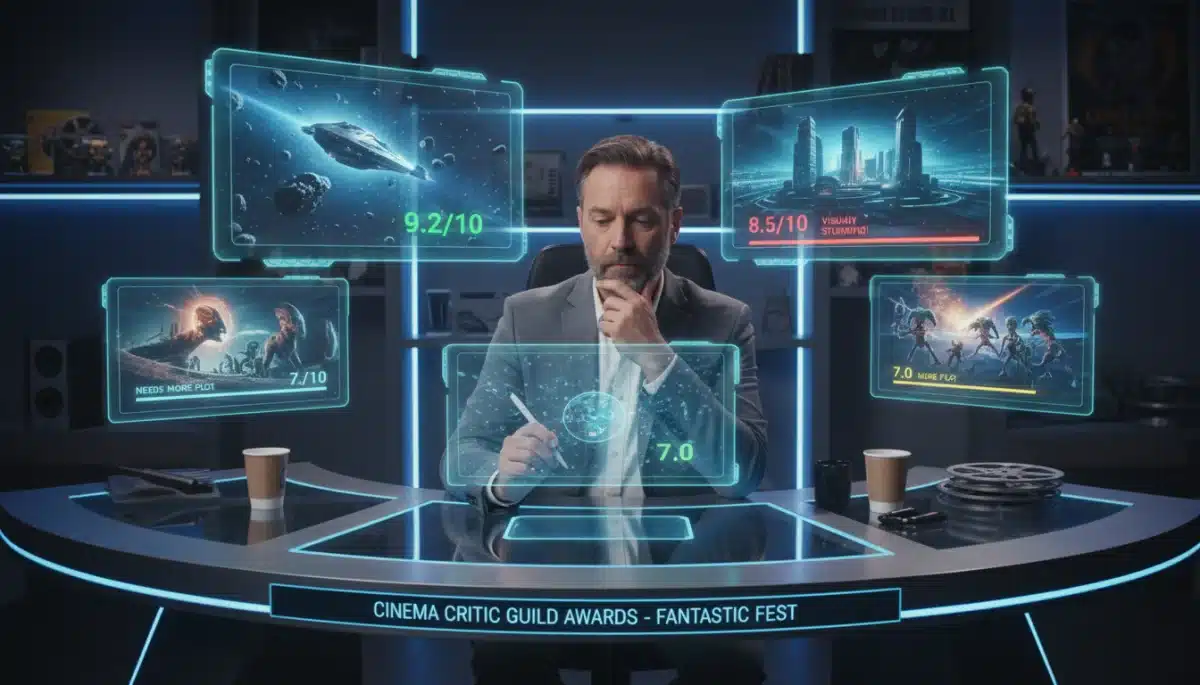
Navigating Fan Expectations
Fan communities are passionate and vocal, and their reactions can significantly impact a film’s initial buzz and subsequent critical discourse. Films that fail to meet these high expectations, particularly those based on popular books or games, often face a harsher reception.
- Loyalty to Source Material: Deviations from original stories often provoke strong negative reactions.
- Nostalgia Factor: New entries struggling to live up to the nostalgic ideals of classic films.
- Online Discourse: Social media amplification of both positive and negative fan sentiments.
Understanding the interplay between audience expectations and critical perspectives is vital. While critics aim for objectivity, they are also part of the broader cultural conversation. The challenge for filmmakers is to create works that are both innovative enough to impress critics and respectful enough to satisfy a discerning fan base.
Technological Advances and Storytelling Integration
Science fiction has always been at the forefront of technological imagination, often predicting future innovations. However, in 2026, the sheer pace of technological advancement presents a unique challenge for filmmakers: how to integrate cutting-edge concepts seamlessly into compelling narratives without overwhelming the story. Many recent sci-fi releases have struggled with this integration, leading to critical remarks about underdeveloped plots despite impressive visuals.
The allure of dazzling special effects can sometimes overshadow the fundamental need for strong storytelling. When technology becomes the main character, or when exposition is solely delivered through futuristic gadgets, the human element can be lost. Critics are increasingly looking for films where technology serves the narrative, rather than becoming the narrative itself.
The Pitfalls of Over-Reliance on CGI
While computer-generated imagery (CGI) allows for the creation of incredible worlds and creatures, its overuse or poor implementation can detract from the film’s realism and emotional impact. When visual effects feel artificial or are used to mask narrative deficiencies, critics are quick to point out the imbalance.
- Unconvincing Visuals: CGI that doesn’t blend seamlessly with practical effects or live-action.
- Distracting Spectacle: Action sequences that are visually impressive but lack narrative purpose.
- Techno-Babble Overload: Explanations of futuristic tech that are overly complex and alienating.
The most successful sci-fi films manage to weave their technological marvels into the fabric of the story, making them integral to the characters’ journeys and the overarching themes. The critical consensus in 2026 suggests that many filmmakers are still grappling with this balance, resulting in a number of visually stunning but narratively weak productions.
The Future of Sci-Fi: Lessons from 2026’s Standouts
While the overall picture for sci-fi in 2026 might seem bleak with only two out of ten releases earning high marks, it’s crucial to examine what these successful films did right. By analyzing the common threads and innovative approaches of these standouts, we can glean valuable insights into the future direction of the genre and identify what resonates with both critics and audiences.
The highly-rated films of 2026 were not necessarily the biggest budget productions, nor were they always based on pre-existing franchises. Instead, they shared a commitment to original storytelling, compelling characters, and a thoughtful integration of their speculative elements. They dared to be different, offering fresh perspectives and emotional depth that transcended mere spectacle.
Key Attributes of Highly-Rated Sci-Fi Films
The two films that garnered critical acclaim demonstrated a clear understanding of what makes sci-fi impactful. They didn’t just tell a story; they invited audiences to ponder profound questions and connect with relatable struggles, even within extraordinary settings.
- Strong, Original Narratives: Fresh concepts that challenged genre conventions.
- Deep Character Exploration: Protagonists with complex motivations and believable arcs.
- Thoughtful Thematic Resonance: Films that explored relevant societal or philosophical issues.
- Balanced Visuals and Story: Special effects serving the narrative, not overshadowing it.
The lessons from 2026’s standout sci-fi films are clear: originality, character-driven stories, and thematic depth are paramount. For the genre to thrive and consistently achieve critical success, filmmakers must prioritize these elements, ensuring that future releases are not just visually impressive but also intellectually stimulating and emotionally resonant.
| Key Point | Brief Description |
|---|---|
| Low Critical Scores | Only 2 out of 10 recent sci-fi releases earned high marks in 2026. |
| Lack of Originality | Many films are criticized for recycled themes and narrative innovation. |
| Narrative Depth Issues | Spectacle often overshadows character development and thematic exploration. |
| Budgetary Influence | Financial pressures can lead to safe, committee-driven storytelling. |
Frequently Asked Questions About Sci-Fi Critiques in 2026
Critics cited a pervasive lack of originality, shallow character development, and an over-reliance on spectacle without substantive narrative depth as primary reasons for the low scores across many 2026 sci-fi releases.
Yes, heightened audience expectations, especially from dedicated fan bases, play a significant role. Films that deviate too much from established lore or fail to innovate sufficiently often face harsher reviews from both critics and fans.
Both large and small budgets present challenges. Big budgets can lead to creative compromises for mass appeal, while small budgets might limit visual scope. Striking a balance between financial viability and artistic vision is crucial.
The successful films prioritized original narratives, deep character exploration, and thoughtful thematic resonance. They integrated technology seamlessly into compelling stories, focusing on human elements rather than just visual effects.
While the critical consensus suggests a struggle for many releases, it’s more indicative of an evolving genre. The demand for higher quality, originality, and thematic depth means that only truly exceptional films are breaking through the noise.
Conclusion
The critical consensus on sci-fi in 2026 paints a clear picture: merely two out of ten recent releases achieving high marks is a wake-up call for the genre. This trend underscores a collective demand from both critics and audiences for greater originality, profound narrative depth, and compelling character development. While technological spectacle remains a hallmark of science fiction, its integration must serve the story rather than overshadow it. The successful films of the year demonstrate that true innovation lies not just in visual effects, but in daring to explore new ideas and human experiences within fantastical settings. For sci-fi to reclaim its critical dominance, filmmakers must prioritize substance over flash, fostering a new era of imaginative and resonant storytelling.